Pantry Pest Elimination Miami
Miami kitchen environments face distinct storage vulnerabilities due to continuous 70% to 85% relative humidity and year-round ambient warmth. In multi-unit buildings throughout Brickell and Edgewater, species such as…
Miami kitchen environments face distinct storage vulnerabilities due to continuous 70% to 85% relative humidity and year-round ambient warmth. In multi-unit buildings throughout Brickell and Edgewater, species such as…
Miami kitchen environments face distinct storage vulnerabilities due to continuous 70% to 85% relative humidity and year-round ambient warmth. In multi-unit buildings throughout Brickell and Edgewater, species such as Plodia interpunctella (Indianmeal moth) and sawtoothed grain beetles reproduce inside sealed dry goods, cardboard packaging, and under baseboard cavities. Larvae actively feed on milled grains, pet foods, dried fruits, and spice containers before migrating into shelf pin holes and cabinet hinges to pupate. Standard consumer aerosol bug bombs fail to penetrate these micro-crevices and risk contaminating open kitchen preparation surfaces. Rather than releasing airborne chemicals, structural intervention physically interrupts the biological breeding cycle inside the pantry framework.
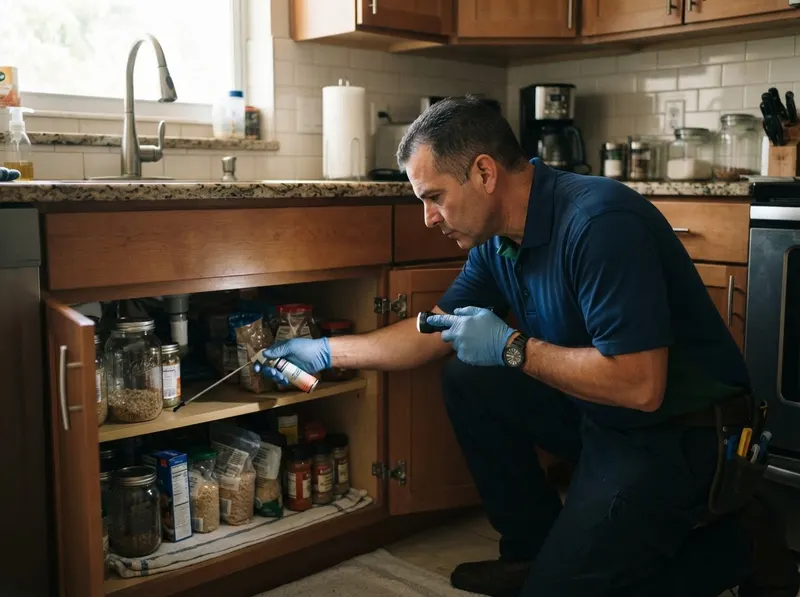
Pantry pest treatments require clear operational sequencing to secure the kitchen without disrupting resident living conditions. 1. Technicians examine dry goods to isolate infested packages from uninfested dry inventory. 2. A commercial HEPA-filtered vacuum extracts wandering larvae, silken webbing, and loose pupae from cabinet runners, hinge recesses, and sub-cabinet voids. 3. Food-contact surfaces are wiped clean using mild, non-residual botanical agents that leave zero synthetic chemical residues or toxic fumes. 4. Cabinet perimeters, pipe collaring beneath the kitchen sink, and wall penetrations receive targeted micro-injections of food-grade amorphous silica aerogel, drying out migrating adults on contact without contaminating indoor air.
Cabinet architecture dictates the proper methodology. Single-family homes in Coconut Grove and Coral Way often feature expansive built-in wooden pantries with extensive unsealed tongue-and-groove joinery that harbor deep larval populations. In contrast, modern high-rise residences along Biscayne Boulevard frequently feature modular European cabinetry where pests travel along shared chase lines and electrical conduits behind the drywall. Selecting physical exclusion and crevice desiccation over chemical broadcast treatments eliminates the requirement for multi-day resident evacuations. UrbanNest Pest Care completes applications in 60 to 90 minutes, allowing families and pets to safely re-enter the kitchen immediately after service completion.
Every job gets a firm, written price after a free on-site visit.
For standards, safe disposal, and service guidance on pest control services in Miami, FL, useful references include U.S. EPA, ENERGY STAR, U.S. Dept. of Energy, Consumer.gov, U.S. Census Bureau, and Google Maps. General consumer and small-business resources are available from USA.gov, Better Business Bureau, FTC Consumer Advice, U.S. Small Business Administration, and Ready.gov.
Tell us about your pantry pest elimination job in Miami and we'll send a clear, written quote, usually the same day.